7 Ways Insurance Companies Lowball Your Total Loss Settlement (And How to Push Back)
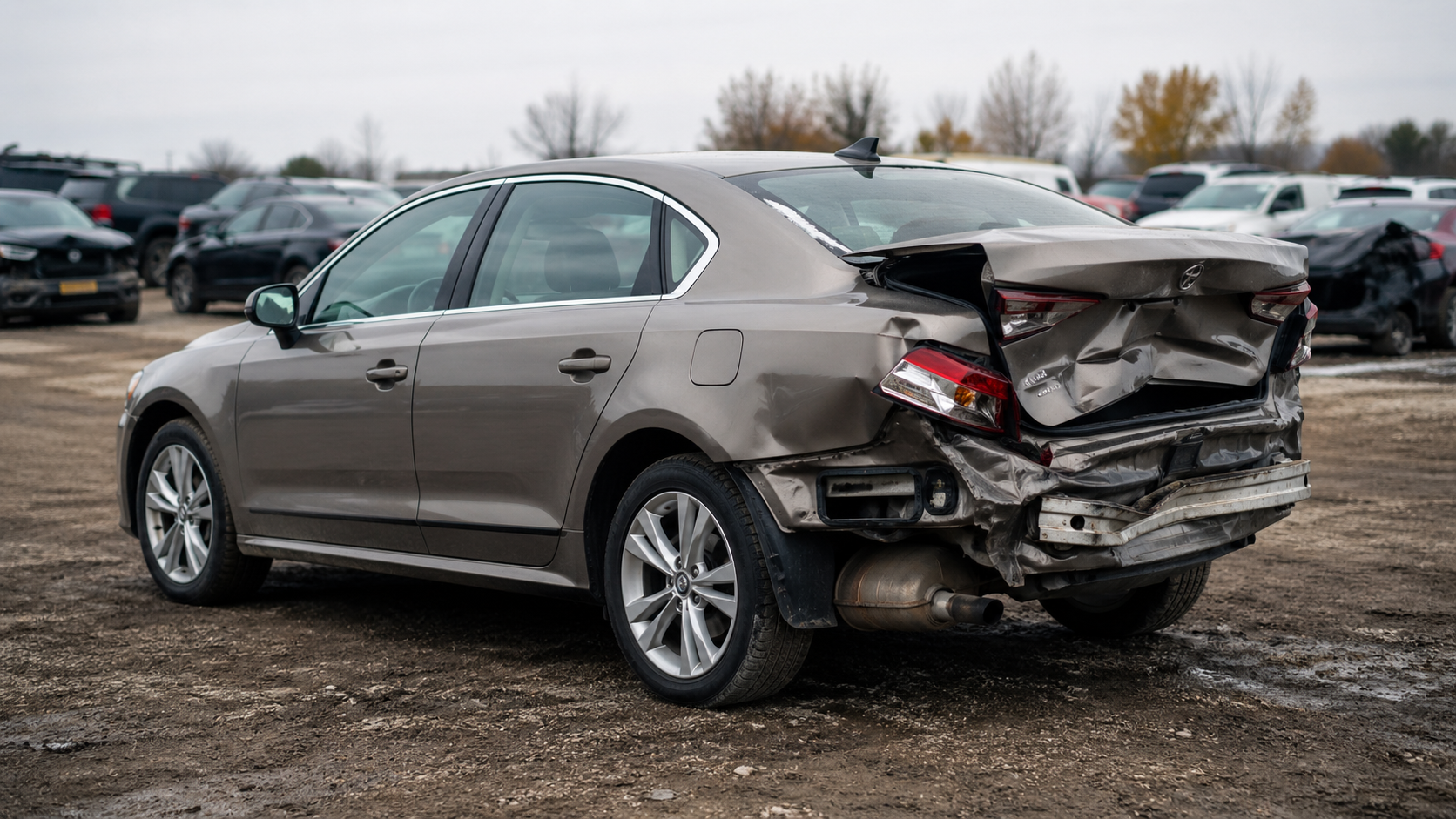
After your car is totaled, the insurer’s first offer is rarely the final number. It’s an opening. Calculated from a database of comparables and a few internal rules, the offer arrives in the mailbox or the claims portal looking like a final answer when it’s actually closer to a starting bid in a negotiation that most drivers never realize they’re in. Sound dramatic? It shouldn’t.
I write about auto insurance pricing for a living, and I keep hitting the same pattern in the .gov consumer-protection literature. State insurance departments publish guidance on total loss settlements for a reason, and the more I read, the more I notice that the guidance is often more generous to the consumer than the consumer realizes. A few examples I keep going back to:
- Washington’s Office of the Insurance Commissioner has a dedicated page on what to do after your car is totaled [1].
- Texas Department of Insurance has its own consumer guide for the same situation [2].
- California’s Department of Insurance runs a free mediation program for valuation disputes [3].
- New York’s Department of Financial Services has decades of opinions explaining what insurers are legally required to include in the payout [4].
That’s a lot of state energy spent telling drivers how to push back. So why don’t more drivers? My read is that most people see the offer letter, don’t know they have any leeway, and sign it because the car is already gone and they want the money.
Below are seven tactics I see show up in lowball total loss offers, each paired with the .gov rule that pushes back. I’d treat any one of them as a reason to ask for a written copy of your insurer’s valuation report. Two of them, and I’d invoke the appraisal clause.
1. Comparable vehicles pulled from outside your local market
Most insurers calculate actual cash value by averaging the prices of “comparable” vehicles. The trick I keep coming back to is in how local “local” actually is.
Washington’s OIC says insurers must locate comparable vehicles in your normal parking area. If they can’t find enough matches, they expand the radius 25 miles at a time. They need your permission to search beyond 150 miles [1].
In a market where used car prices vary by 10 to 20 percent across regions, that radius matters a lot. A comparable Civic two states away in a low-cost market is not the same as a Civic three towns over in mine. Different market. Different price. Where did the comparables come from? The check: ask. If the answer is “anywhere within a few hundred miles,” I’d assume the offer is understated. My own rule of thumb is that anything past a 50-mile radius in a metro market is suspect, because metro pricing rarely moves uniformly across that kind of distance, especially when you start crossing tax-jurisdiction lines and inventory pockets that one dealer group dominates and supply happens to be tight in your zip but loose forty miles up the highway.
2. Sales tax left out of the actual cash value
This one is surprisingly common. And surprisingly specific to state law.
New York Regulation 64 says sales tax must be included in the actual cash value calculation, before any salvage deduction [4]. California’s auto consumer guide says total loss settlements must include taxes, license fees, and transfer fees [5]. Washington’s OIC explicitly lists the taxes and fees that must be added to your settlement, including the RTA tax, license fee, weight-based fee, and filing fee [6].
So why is the tax line missing on so many offer letters? My honest answer? I don’t know. Maybe automation, maybe a specific carrier’s interpretation of “actual cash value,” maybe the state law isn’t as cleanly enforced as the consumer guidance pages imply, or maybe it’s being rolled into the ACV number in a way that obscures the math but still leaves the consumer short the difference between sales-tax-on-pre-salvage-ACV and sales-tax-on-post-salvage-ACV, which is exactly the calculation New York’s DFS regulators have spent decades writing opinions about. Either way, the check is the same. Look at your offer breakdown. Sales tax should be its own line. If it isn’t, ask why.
3. Pro-rated registration and license fees skipped
Same issue, different line item. Washington’s OIC says insurers must pro-rate the unused portion of your annual taxes and fees and add that to your settlement. The math is simple. Annual fee, divided by 12, multiplied by the unused months. If your annual RTA tax was $120 and there are 9 months unused, that’s a $90 line item, separate from the sales tax [6].
Most drivers never see that line. Most never ask for it. I think part of the reason is that the line is genuinely small in dollar terms, often somewhere between $40 and $200 depending on your state and how recently you renewed your tag, but I’d still pursue it on principle, because the cumulative effect of ignoring small line items is exactly how an offer drifts five hundred dollars below what state law actually entitles you to before anybody at the kitchen table notices. The check: request the pro-rated tag, registration, and weight-fee credits if you live in a state that requires them. If the answer is “we don’t do that,” ask for the written legal basis. Then call your state DOI.
4. Aggressive condition downgrades on the valuation report
Comparable-vehicle databases let the insurer rate your car’s condition at intake. The condition rating moves the value, sometimes by a few thousand dollars. A car logged as “fair” instead of “good” because of a few photographed scratches can produce a settlement that’s notably below market for a car with that mileage and trim.
How do they decide between “fair” and “good”? Usually a desk review of the photos taken at the scene or at the body shop. Rarely a ground-up inspection of the interior, recent maintenance records, or the actual condition of the drivetrain. So the rating that decides whether you get fair-condition pricing or good-condition pricing comes down to whoever is looking at a phone-camera photograph of your bumper from a parking lot at the time of the loss, which is a thin basis for a five-thousand-dollar swing.
The check: the total loss valuation report shows the condition rating they applied. Washington’s OIC tells consumers explicitly to ask for that report by name, because the insurer might not provide it unless you do [1]. Once you have it, you can challenge a “fair” rating with photos, service records, and a list of recent maintenance from your own files. Push back hard.
5. Stale comparables in a market that’s moved
Vehicle prices move. Sometimes a lot, sometimes fast. The comparable cars in the valuation report may be vehicles that sold three months ago. Or six. If the local used market has moved 5 percent since those sales, your offer is 5 percent low before any other adjustment.
Texas TDI tells consumers directly to research online prices and local listings for comparable models when disputing a valuation [2]. The check: pull current asking prices from local listings the day you receive the offer. Compare the dates the insurer’s comparables were sold against the dates of your current comparables. If the gap is meaningful, you’ve got a written argument for a higher number. I’d take screenshots, because asking prices change daily and I want my evidence frozen in time when I email the adjuster.
6. Premium trim, options, and equipment dropped from the valuation
Vehicle valuation databases look up your VIN, but the trim level, package, and aftermarket options are not always reflected accurately. A leather interior, premium audio, an upgraded wheel set, factory navigation, a tow package, or a recent set of tires can all change the value. And they’re routinely missed in my read of consumer-protection complaints in this category.
Texas TDI’s guidance says to “document special features or custom parts” when disputing the valuation [2]. The check: sit down with the original purchase paperwork or the dealer build sheet and write a list of every option that the comparables don’t have. Send the list. The insurer is supposed to value a similar vehicle. If the comparables are stripped trims, you’re entitled to push for matching equipment.
7. The total loss valuation report not provided unless you ask
This is the meta-tactic. The big one. And the one Washington’s OIC calls out most directly. The insurer’s number is calculated. The data is sitting in a report. They don’t have to volunteer it.
Washington’s OIC: “The insurer might not provide this report unless you ask for it” [1]. Texas TDI: “You can ask the insurance company what source it used to decide your car’s value” [2]. So ask. In writing. Cite the state guidance if you have to.
Without the report? You’re negotiating against a number you can’t audit. With it? You’re negotiating against a list of comparables you can verify against the actual market. Of all seven items in this list, this is the one I’d put first if I were picking only one. Because the other six tactics on this list become visible once you have the report in your hands. Without it, they’re invisible to you.
How do you actually push back?
Here’s a short playbook. Use it in this sequence:
- Request the total loss valuation report in writing. Cite your state DOI’s guidance if the adjuster pushes back. This is your audit trail.
- Pull your own comparables. Local listings, dealer prices, completed sales. Write down VINs, prices, and dates so the comparison is apples to apples.
- Confirm taxes and fees. Ask whether sales tax, license fees, and pro-rated registration credits are included per your state’s rules. If not, ask for the legal basis for excluding them.
- Invoke the appraisal clause if the gap is meaningful. Most policies include one. Each side hires an appraiser. The two appraisers pick a third as umpire. The umpire’s decision is binding [7]. Texas TDI explains the process plainly.
- File a state DOI complaint, and use mediation if your state offers it. California runs a free auto claims mediation program for disputes over $7,500 with $2,000 in dispute. The insurer pays the mediator [3]. Other states have similar programs through their consumer services bureaus.
I’ll be honest about a limitation in writing this. I don’t have data on what percentage of total loss disputes get resolved in the consumer’s favor after the appraisal clause is invoked, partly because that data lives inside individual state DOI complaint files and partly because most disputes resolve without ever reaching the appraisal stage at all. My guess is the win rate is high when the consumer brought real comparables to the table, and low when they didn’t. The .gov consumer guidance pages assume the consumer comes prepared. Reading between the lines, I think most don’t.
The other thing I’d flag. What’s the gap between the insurer’s first offer and what your car is actually worth in your local market? In my experience writing about this, that gap is the single biggest source of legitimate consumer pull in the entire claims process. The crash already happened. The car is already gone. What’s left is a number. And the number is negotiable in ways most drivers don’t realize until they read the .gov page their state insurance commissioner spent staff time writing for exactly this situation, knowing how often a first offer gets accepted simply because the person signing it doesn’t realize there’s anything to push against.
If you’ve just had an at-fault accident and your car is heading toward a total loss declaration, the QuoteFii blog’s accident guide walks through what happens to your premium next. The gap insurance guide covers what happens if you owe more on the loan than the settlement actually pays. Read both before the renewal letter arrives. That’s the right time.
Adam is the founder of QuoteFii, an auto insurance rate comparison tool. The QuoteFii blog publishes rate methodology built from state Department of Insurance filings and federal data.
This article is for informational purposes only and does not constitute insurance, financial, or legal advice. Information may contain errors or be outdated. Always verify details with a licensed insurance professional before making coverage decisions.
Sources
[1] Washington Office of the Insurance Commissioner, “What happens after your car gets totaled,” insurance.wa.gov
[2] Texas Department of Insurance, “My car was totaled! Now what?,” tdi.texas.gov
[3] California Department of Insurance, “Automobile Claims Mediation Program,” insurance.ca.gov
[4] New York Department of Financial Services, “OGC Opinion №08–10–13: Calculation of total loss payments upon automobiles’ title transfer fees and sales tax,” dfs.ny.gov
[5] California Department of Insurance, “Automobile Insurance Terms,” insurance.ca.gov
[6] Washington Office of the Insurance Commissioner, “How insurers calculate taxes and fees when your car is totaled,” insurance.wa.gov
[7] Texas Department of Insurance, “What if my insurance isn’t paying enough?,” tdi.texas.gov
